| Iqbal | 2010-04-30 20:07:30 |
| Ghayyoor-LHE | 2010-04-30 20:05:00 |
| Dr.Suhail-Siemens | 2010-04-30 20:02:30 |
| Dr.Aslam-Gogera | 2010-04-30 20:00:00 |
| WAC-Farzana | 2010-04-30 19:57:30 |
| WAC.FarzanasDaughte | 2010-04-30 19:55:00 |
| Sarfraz | 2010-04-30 19:52:30 |
| YejahIkram | 2010-04-30 19:50:00 |
| SamraKamvel | 2010-04-30 19:47:30 |
| ProfGwendolyneBNU | 2010-04-30 19:45:00 |
| Omar-BNUni | 2010-04-30 19:42:30 |
| MadijaAjaz | 2010-04-30 19:40:00 |
| BNUdissFarooq | 2010-04-30 19:35:00 |
| HomEc | 2010-04-30 19:30:00 |
| BNU library | 2010-04-30 19:25:00 |
| Amna-BNUn | 2010-04-30 19:22:30 |
| AmadKaleem | 2010-04-30 19:20:00 |
| PDP | 2010-04-30 19:10:00 |
| Shirazi | 2010-04-30 19:05:00 |
| Aamir Rafique | 2010-04-30 19:00:00 |
Important Internet Radio Interviews
Internet Radio in the Toy Village
Thatta Ghulamka Dhiroka – Toy Village and also Dolls Village – has entered a new era with the start of the Internet Radio Project “radiotv -thatta village”by the NGO Anjuman-e-Falah-e-Aama. The idea of the Internet Radio originated from influx of visitors and their interests since early 90s. The usage of city based knowledge in combination with the experiences gained in rural areas was already an important aim and now the NGO wanted to integrate lectures and workshops that are held in the village. Awards from international exhibitions and organizations intensified the desire to engage more with the periphery. Although there is quite a lot of varied interests and participations from the surrounding areas, the knowledge gained however can be spread effectively only with modern means, like the Internet-Radio.
One should not hinder the modern technology rather integrate its useful aspects in the lives of people.
More Radio TV Project Impressions
Left to right: Prof Dr. Norbert Pintsch, Khalid Javaid, CEO from Lok Virsa, National Museum, Islamabad, Prof Zulfikar Ali Bhatt, Bahauddin Zakariya University, Multan
Internet Radio Station TV Thatta Village is Calling
Internet Radio Station TV Thatta Village is Calling You appeared in the News
“Ladies and Gentlemen, this is Internet Radio Village Thatta (District Okara) calling you. I am Farooq Ahmed, in charge of village NGO Anjuman-e-Falah-e-Aama. We are starting our test transmissions. Soon, we will start our Urdu transmissions for local agricultural community and English for others, Sarfraz will be our folk singer, Interviews videos will be aired in audios,” was the first announcement from Internet Radio Station TV Thatta Village that started test transmission in October 2009. The regular transmission form Internet Radio Station TV Thatta Village will start in February 2010.
The cluster of mud and brick houses in the plains of Punjab, Thatta Ghulamka Dheroka was like any typical Pakistani village only a decade ago. A lot has changed in a rustic village of about 200 household situated 80 kilometers away from Lahore in less than last ten years time. The story of self help begins in 1990 when Dr. Senta Siller, a German graphic designer, and her husband Dr. Norbert Pintsch, an architect, were invited by Amjad Ali - a Pakistani student in her class – to visit his ancestral village in the hinterland of Punjab. They came and saw a village where farmers still lived as they did in an ancient era. No one in the village could afford fired brick buildings so nearly all the houses were built using mud material. There was no electricity. No road lead to the village.
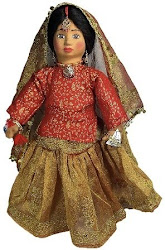
The German couple decided to work with people of the village. Dr. Senta Siller established a Women's Art Centre and started a self help project in the remote village where she mobilized the local women and led them to make hand crafted dolls dressed in traditional attires from different provinces and regions of Pakistan and other decorative items and toys. Simultaneously, Dr. Norbert Pintsch started Technology Transfer and Training Center for men. Result: rapid community development. The additional income generated by making handicrafts is distributed among artisans and a part of it is spent on the uplift of the village and the community. This has changed the face of the village and made Thatta Ghulamka Dheroka a rural travel attraction.
At first only women of Thatta Ghulamka Dheroka benefited from economic improvements but soon the project expanded and girls and women from other villages were integrated. Presently, the village project is working in collaboration with other NGOs in Pakistan and abroad. Internet radio solution is one of the best affordable solutions to reach out to all those involved in the self help project anywhere.
Internet Radio is an audio broadcasting service transmitted via the Internet. Internet Radio involves a streaming medium that presents listeners with a continuous "stream" of audio. Internet Radio service is usually accessible from anywhere in the world. Internet radio is being used to offer news, sports, talks, and various genres of music like traditional radio stations. “People in the villages need information and Internet Radio Village Thatta will offer them what they need,” say Dr. Norbert Pintsch.
Local NGO AeFeA has been harboring to set up own radio and television at the village Thatta Ghulamka Dheroka for a long time. In addition to infrastructure including building, electrification and hardware, special software is also required for streaming of high speed traffic to run the Internet radio. Two rooms have been constructed and new solar units have already been installed in them. Computer and MP3 recorders for the Radio Station have also been set up. Dr. Norbert Pintsch says that the Community Radio will be another first of its kind and will help create awareness among rural communities of the areas about all relevant fields. Plans are to air news, interviews, music and so much more. The radio will also offer advertisements to the interested stakeholders. This will create awareness as well generate some more economic activities at gross roots level.”
“Whatever is happening in the village is a help towards self help,” says Dr. Norbert Pintsch who is fondly called ‘Chaudhry Sahib’ by locals. “Self help efforts are important to direct the population to use the available resources. Land holdings are small and the agricultural activity in the village is not sufficient and therefore it is necessary to provide opportunities for additional income in the villages. This can be done by promoting the traditional culture and its conversion into handicrafts. The approach must always be understood in its totality and implemented properly,” he adds.
Collective community work has changed the face of Thatta Ghulamka Dheroka and made it a travel attraction. The murals are painted on the parameter mud walls in the village where doll collectors and people interested in sustainable development and rural heritage from different initiative groups come and stay as paying guests. The village folks still consider cooing crows as symbol of the arrival of the guests. Architectural competitions are held annually when best mud house is selected. The Chief Harappan Explorer Dr. Mark Kenoyer had the place on the jury in competition held last July. Two German volunteers, Dr. Norbert Pintsch and Dr. Senta Siller, and village people are working together to change the life and outlook in this peaceful hamlet.
One of the sweet traditions that have matured in the village is that Dr. Senta Siller presents a fruit tree to every newlywed couple and a flower tree to the family on the birth of a child. As a result almost every home in the village now has a grown up fruit as well as flower trees.
This time I travelled from the Food Street to the village to see the Internet Radio Station TV Thatta Village that is coming up in the village. Whenever I visited the village, I see something new, something different, which the villagers do to make difference in a place where they belong.
What is Internet Radio
Internet radio is essentially the same as regularly broadcast radio, with a few distinguishing characteristics. Whereas there is a minimal lag time with regular radio because it broadcasts through the air, Internet radio has a lag time of 2.5 to 10 seconds or so, depending on the server. Internet radio is streamed, and so does not involve downloading. You simply log on to the particular site and in it comes.
Receiving the stream is much like listening to your MP3 player, as the format is the same. Several formats are on offer, but the MP3 and ACC formats are currently the most frequently used. As the medium continues to find its footing, there will likely be modifications, which are difficult to predict today.
Coming to village Thatta Kedona Ghulamka Dheroka, Internet Radio will empower the rural community in the rustic village and also offer them information on the subjects of their interests. Stay tuned, the regular broadcost is scheduled to start in early next year (2010).